


Shinichi Suzuki (1898–1998)
So many of us know his teaching method — but not how it began.
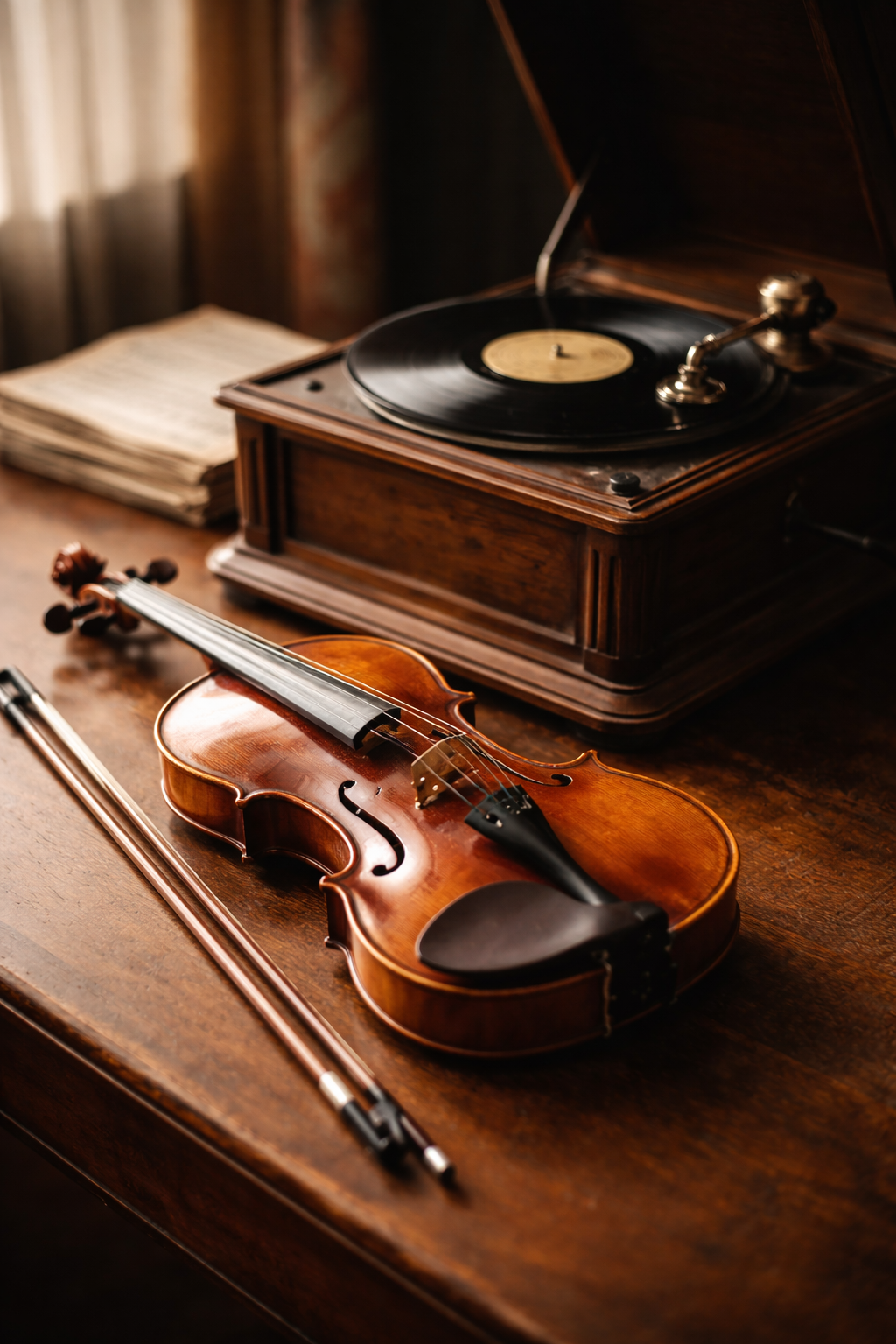
Suzuki grew up in Japan, where his father owned a violin factory. Instruments were part of his daily life, but he did not study the violin as a child. His interest began later, after hearing a recording of Mischa Elman playing Ave Maria (Schubert). He began teaching himself by listening and repeating.
Study in Germany
In his early twenties, Suzuki traveled to Germany to continue his studies. There, he experienced a more structured and disciplined approach to violin playing.
After studying in Germany, he returned with a strong foundation in European technique — precise, organized, and refined. But what he chose to do next was different, placing listening at the center of how students would learn, much like how he himself began.
War and Separation
Suzuki married a German woman, Waltraud Suzuki, during his time in Europe. As tensions escalated leading into World War II, they were separated, and he returned to Japan.
During the war, his family’s violin factory was repurposed for wartime production, and instrument making was largely set aside.
In the years following the war, they were eventually able to reconnect, and she later joined him in Japan.
Returning to Japan
After the war, Suzuki returned to a very different environment.
There was little infrastructure for music education, especially for young children. Rather than rebuilding the system he had seen in Europe, he began working locally with students.
Instead of starting with reading music, he focused on listening.
Students heard the music first, repeated it, and developed their sound gradually.
Beyond Japan
What began as local teaching did not stay local.
In the 1950s and 60s, Suzuki’s students began performing publicly, drawing attention from visiting teachers and musicians. By the 1960s, teachers began studying with him and bringing his approach back to their own countries, especially in the United States and Europe.
The method spread not just through books, but through people.
What Remains
Today, Shinichi Suzuki’s approach is used around the world.
Its core idea is simple: listening comes first.
Shinichi Suzuki may be one of the most influential figures in violin education. His method continues to shape how generations of students first experience the instrument.
Explore More
→ Famous String Players Through Time