


A musician mocking a king could lose everything.
Unless he was the king’s entertainer.
Inside medieval and Renaissance courts, entertainers occupied one of the strangest positions in society. They performed for nobles, kings, and aristocrats while existing slightly outside normal rules of behavior. A jester could insult powerful people, expose hypocrisy, and embarrass members of the court in ways that would have been dangerous for almost anyone else.
And occasionally, they went too far.
The Jester Who Chose “Old Age”
One of the most famous court entertainers was Triboulet, who served the French royal court under Louis XII and Francis I.

Triboulet became notorious for mocking nobles so aggressively that stories about him spread throughout France. According to legend, after insulting the wrong person, he was sentenced to death but allowed to choose how he wished to die.
His answer:
“From old age.”
The king reportedly laughed and spared him.
The story survived for centuries because it perfectly captured the strange immunity some entertainers briefly possessed.
A Joke Could Damage a Noble
Royal courts revolved around status, reputation, and public image. A humiliating joke delivered in front of the court could genuinely embarrass someone politically or socially.
That gave entertainers a strange form of influence.
While courtiers carefully measured every word around royalty, jesters could occasionally speak uncomfortable truths disguised as humor. English jester Will Sommers reportedly enjoyed unusual freedom around Henry VIII, while other entertainers lost favor after mocking the wrong people too openly.
Humor gave court entertainers influence, but it also made them dangerous.
Some Entertainers Paid for It
Not every ruler appreciated being mocked.
Court entertainers could be dismissed, beaten, imprisoned, or exiled after insulting the wrong person too aggressively. Their unusual freedom only lasted as long as powerful people remained amused.
Scottish court jester Archibald Armstrong eventually lost his position after openly mocking influential religious figures too aggressively at court.
The line between protected entertainer and political problem could disappear very quickly.
Entertainers Heard Everything
Musicians, jesters, and performers moved freely through banquets, celebrations, rehearsals, and private gatherings where nobles often assumed entertainers were socially invisible.
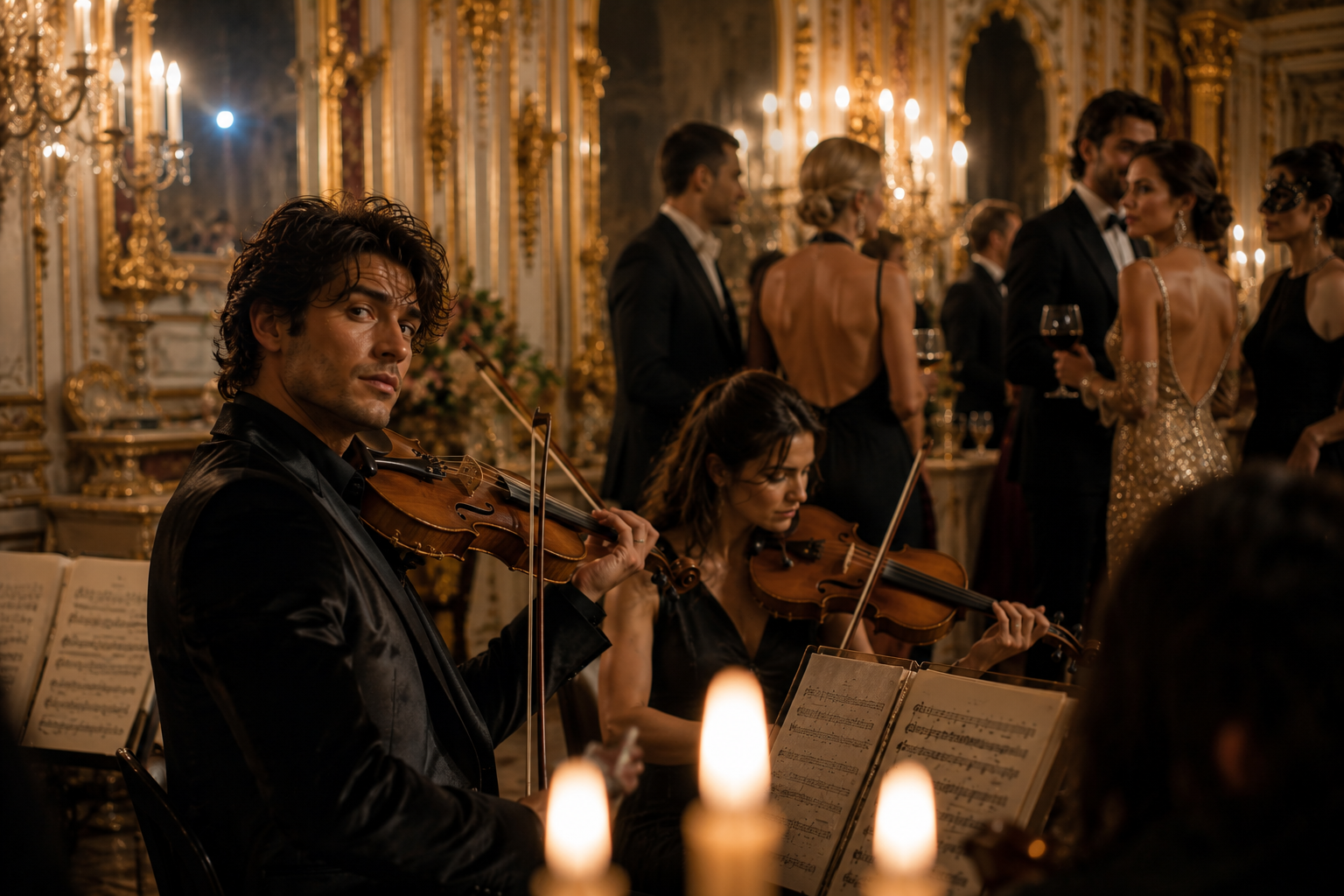
At courts like Versailles under Louis XIV, performers constantly witnessed gossip, rivalries, scandals, and political tension surrounding the royal court.
Some entertainers even carried information between aristocratic circles simply because they traveled so freely through elite spaces.
The people providing the evening’s entertainment often understood the room better than anyone else.
Rivalries Between Court Musicians
Court musicians competed constantly for royal favor, salaries, prestige, and performance opportunities. A successful performance could elevate someone’s reputation overnight, while failure could quietly end a career.
Some rulers intentionally encouraged rivalry because competition produced more ambitious spectacle and entertainment.
Even Wolfgang Amadeus Mozart grew deeply frustrated with aristocratic court culture and the expectation that musicians behave more like servants than respected artists. After tensions escalated with court officials in Salzburg, Mozart reportedly left one position after being dismissed with a literal kick from a royal official.
When Entertainment Became Too Chaotic
Entertainment itself occasionally created anxiety.
During medieval Feast of Fools celebrations, performers and lower-ranking clergy staged parody ceremonies filled with costumes, satire, role reversal, comic songs, and public mockery of authority.
To critics, the spectacle looked dangerously close to social disorder disguised as entertainment.
Even elegant court culture occasionally crossed the line between admiration and suspicion.
Why These Stories Still Fascinate People
Part of the fascination surrounding court entertainers comes from the contradiction they represented.
They entertained power while quietly challenging it at the same time.
Inside rigid courts built on hierarchy, etiquette, and image, entertainers were often the only people allowed to speak dangerously close to the truth.
Centuries later, audiences are still drawn toward performers who can shape atmosphere, command attention, and transform the feeling inside a room through personality, timing, and live performance.
Some things about entertainment never really changed.