


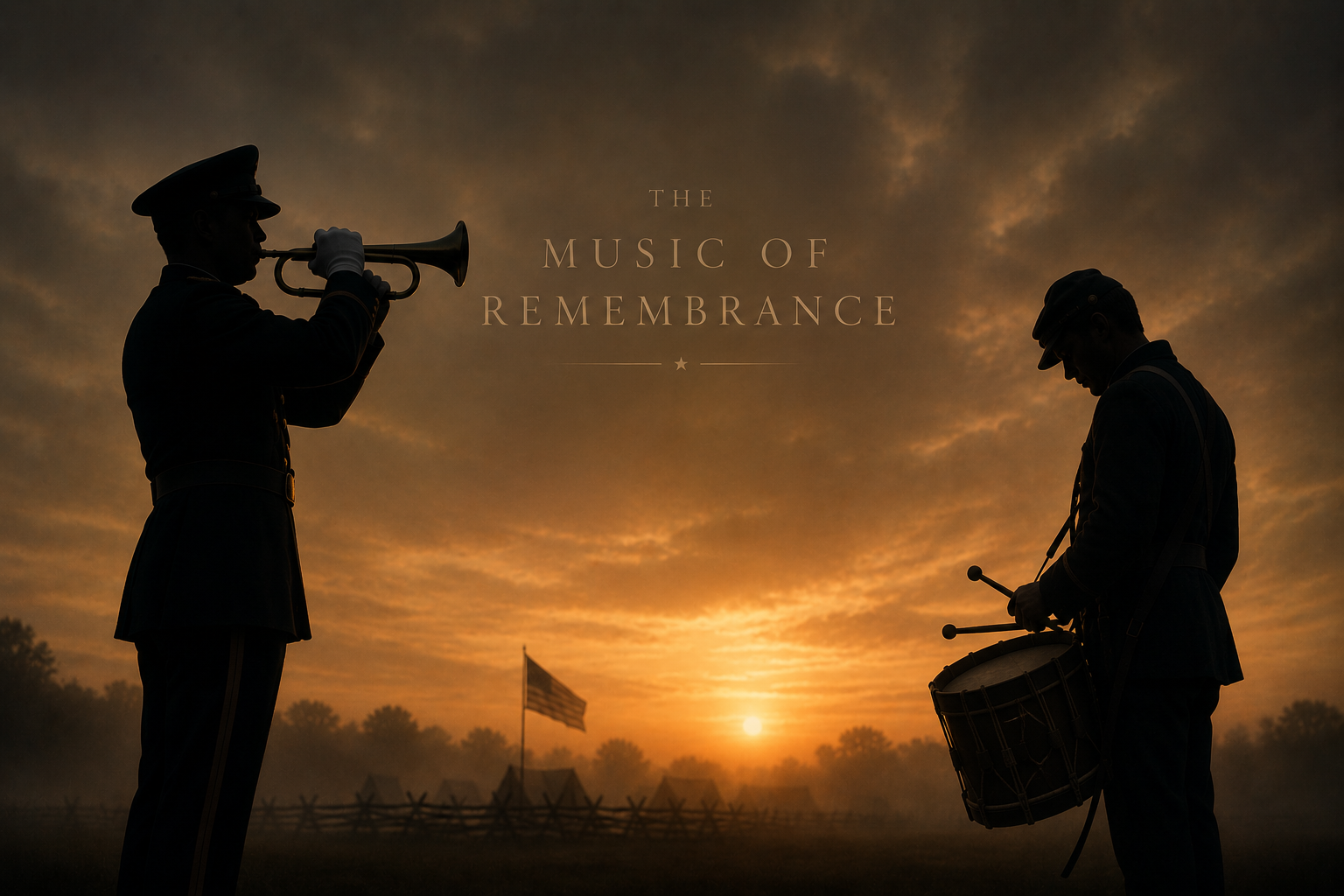
Certain melodies become permanently connected to remembrance.
Across military funerals, memorial ceremonies, national moments, and film scores, music has long helped shape the atmosphere of reflection, memory, and farewell.
Some of these pieces were written more than a century ago. Others came from modern cinema. Yet many share the same emotional qualities: simplicity, distance, stillness, and quiet intensity.
Taps
Few American melodies are more recognizable than “Taps.”
The piece was written during the American Civil War in 1862 by Union Army General Daniel Butterfield with the help of bugler Oliver Wilcox Norton. Originally intended as a new signal for “lights out” in military camps, the melody gradually became associated with military funerals and remembrance ceremonies throughout the United States.
The name itself comes from older military drum signals known as “taps.” Before bugles became standard, drummers used short rhythmic patterns to communicate commands across army camps at the end of the day. Soldiers eventually began referring to the new bugle melody as “Taps,” and the name remained.
Ironically, one of the most recognizable melodies in American history was originally written simply to signal that the day was over.
One of the most famous performances took place during the funeral of President John F. Kennedy in 1963. Broadcast around the world, the performance became especially remembered for a cracked note near the end — a small imperfection that made the moment feel even more human and unforgettable.
The Battle Hymn of the Republic
Where “Taps” feels quiet and solitary, “The Battle Hymn of the Republic” carries a larger and more public energy.
The song became closely connected to Civil War history, military ceremonies, memorial gatherings, and national moments of reflection throughout American history. Its sweeping melody and strong choral tradition created a very different atmosphere from the restraint of “Taps.”
One of the most memorable modern interpretations came from Joan Baez during the 1960s. During a period marked by the Vietnam War, civil rights protests, and political division in the United States, Baez often performed the song as part of anti-war gatherings and public demonstrations.
Her restrained folk performances transformed the piece into something more intimate and reflective while still preserving its historical weight. Rather than sounding purely ceremonial or triumphant, her interpretations emphasized reflection, humanity, and the complicated emotions surrounding war, patriotism, and national identity.
Together, “Taps” and “The Battle Hymn of the Republic” represent two different sounds of remembrance: one deeply personal, the other collective and ceremonial.
Modern Film Scores and the Sound of Reflection
Modern film composers often draw from many of the same emotional traditions found in ceremonial and remembrance music.
One striking example is Now We Are Free from Gladiator by Hans Zimmer and Lisa Gerrard.
Though written for film rather than ceremony, the piece carries many of the same emotions associated with remembrance music: reflection, farewell, distance, and peace. The spacious orchestration and haunting vocal writing give the score a timeless emotional quality that continues to resonate with audiences around the world.
Like many historic ceremonial melodies, its power comes less from spectacle and more from atmosphere, memory, and emotional restraint.
Music and Memory
Whether performed by a solitary bugler, a folk singer, a military band, or a full orchestra, remembrance music continues to endure because of its ability to create stillness and reflection.
Explore More:
→ Film Scores & Cinematic Strings
→ Explore the Sound Library