
Ancient Music
Long before formal concert traditions, music served as a primary language of expression—used to mark ritual, reflection, remembrance, and communal life. In the ancient world, sound was inseparable from meaning; music shaped how stories were told, prayers were offered, and sacred moments were recognized.
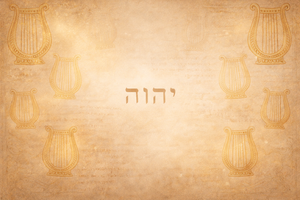
Early musical traditions centered on instruments that mirrored the human voice. Harps and lyres, with their sustained resonance and expressive range, accompanied poetry, sacred texts, and oral histories. The Book of Psalms, traditionally associated with King David, reflects this intimate relationship between music and emotion. These works were conceived not as silent texts, but as songs—meant to be sung, played, and shared.
Alongside strings and horns, ancient cultures also used bells—small in size, but profound in purpose. In biblical tradition, bells were woven directly into sacred life. In the Book of Exodus, bells appear on the hem of the high priest’s garments, worn by Aaron. Their gentle sound marked movement within the holy space, signaling presence, reverence, and continuity. The sound itself carried meaning: a reminder of order, devotion, and the boundary between the sacred and the ordinary.
Unlike the declarative call of the shofar, bells functioned quietly and continuously. Their soft ringing punctuated silence, creating awareness rather than command. Across ancient cultures, bells were used to sanctify moments, ward off danger, and draw attention to transitions—between spaces, states of mind, and moments in time.

1 Samuel 16:23 (KJV)
And it came to pass, when the evil spirit from God was upon Saul, that David took an harp, and played with his hand: so Saul was refreshed, and was well, and the evil spirit departed from him.

Song and Celebration
Book of Exodus — After crossing the Red Sea, Miriam leads the women with timbrels and dancing (Exodus 15). Music here marks deliverance and collective joy.
Book of Judges — Songs appear as historical record, preserving memory through music rather than prose.
Instruments Named Explicitly
Book of Genesis — Jubal is described as the ancestor of those who play the lyre and pipe (Genesis 4:21), often cited as one of the earliest biblical references to instrumental musicians.
Book of Daniel — Lists multiple instruments (harp, lyre, trigon, pipe) used in ceremonial and court settings.
Music in Worship and the Temple
Book of Chronicles — Details the organization of temple musicians under King David, including choirs, string players, and cymbalists. Music is treated as a structured, disciplined role.
Book of Ezra — Mentions singers and musicians restoring worship after exile.
Poetry Meant to Be Sung
Song of Songs — Lyrical, musical poetry centered on love and longing.
Book of Lamentations — Written in rhythmic, poetic form, reflecting how sorrow and grief were expressed musically.
Together, strings, horns, and bells reveal the full spectrum of ancient music: intimate and communal, reflective and ceremonial. Music was not performance—it was participation. It shaped how people listened, moved, gathered, and understood the world around them.
Ancient music reminds us that sound has always been essential. Long before notation or concert halls, music existed to mark meaning—and to connect human life with something greater than itself.
→ Explore Our Ensembles
→ View Repertoire
→ Hear the Sound Library 🎧
→ Real Wedding Music & Playlists
→ Corporate Events
→ Contact Parkwest Strings